 Rachel BuscallRacing
Understeer and oversteer explained: causes and fixes
By Rachel Buscall · · 6 min read
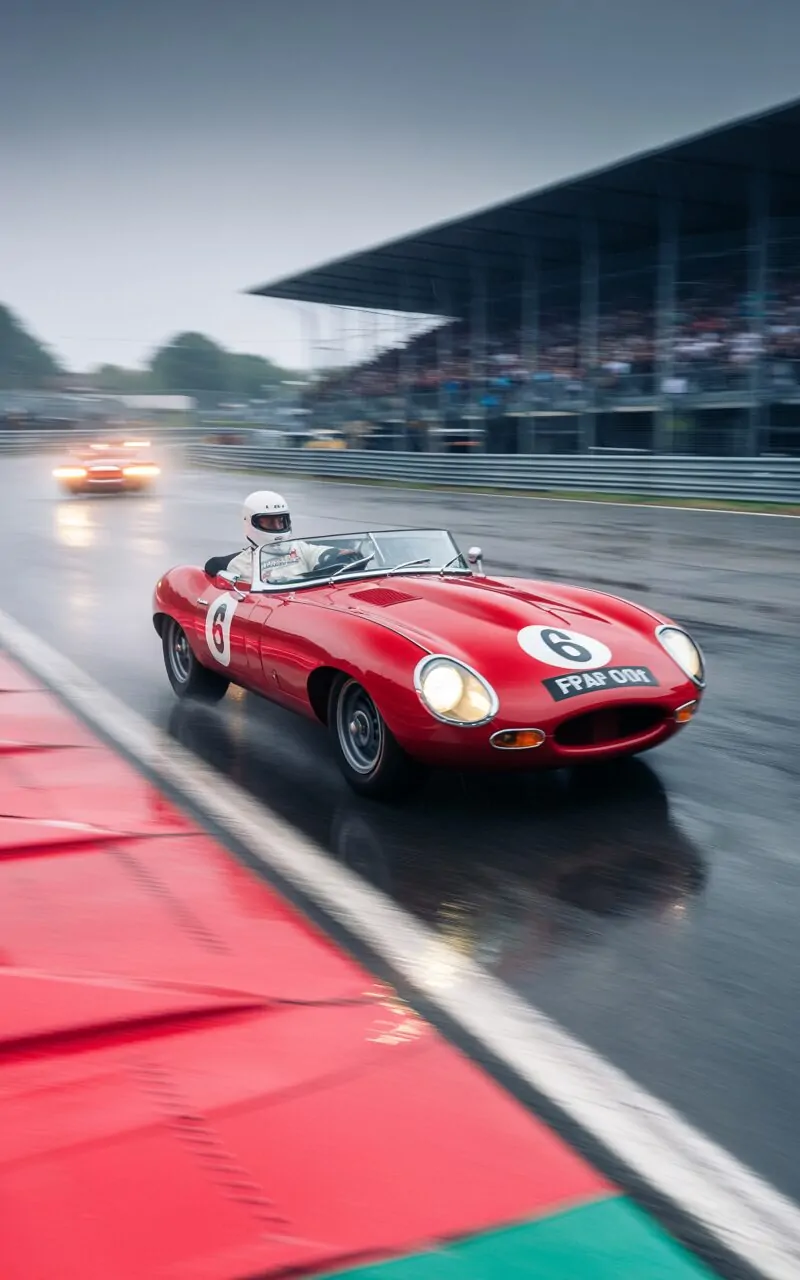
Understeer and oversteer describe what happens when a car runs out of grip in a corner. Understeer is when the front tyres lose grip first, so the car carries on wider than you steered. Oversteer is when the rear tyres lose grip first, so the back of the car slides out and the car turns more than you asked it to. Knowing which one you have, and why it happened, tells you what to do with your hands and feet next.
What is the difference between understeer and oversteer?
The difference is which end of the car slides first. With understeer the front tyres give up, the nose pushes towards the outside of the corner and adding more steering does little. With oversteer the rear tyres give up, the tail swings towards the outside and the nose points into the corner. Racing drivers often call them push and loose.
Engineers use a stricter definition. Standards bodies such as SAE International and ISO describe a car's steering balance by how much extra steering it needs as cornering force builds, measured in steady conditions on a level surface. On a track day you will hear the words used more loosely, for how the car behaves at the limit of grip. The technical background is summarised here if you want the vehicle dynamics in full.
The two behave very differently at the limit. A car that is understeering follows a wider path than you intended, but it stays stable. A car that is oversteering becomes unstable and tends to spin unless the driver catches it. That is why the corrections for each are almost opposite, and why it matters that you can tell them apart.
Why grip runs out at one end first
Each tyre has a limited amount of grip, and it is shared between turning, braking and accelerating. Ask a tyre to brake hard and turn at the same time and you are spending the same grip twice. When the demand at one end of the car is greater than that end can supply, that end slides.
The demand moves around because weight moves around. Under braking, load shifts onto the front tyres, giving them more grip and taking it away from the rear. Under acceleration the opposite happens and the rear tyres gain load. Through a corner, load moves onto the outside tyres. Every input you make changes which tyres are working hardest, which is why smooth inputs matter so much on circuit.
The car itself plays a part too. Weight distribution, suspension settings, tyre pressures and wear, and which wheels are driven all change the balance. A rear-wheel-drive car with plenty of power can be pushed into oversteer simply by spinning the rear wheels. Too much braking effort at the front can make the front tyres lock or slide and cause understeer.
Common causes of understeer
The most common cause is simply arriving at the corner too fast. If the speed is too high at turn-in, no amount of steering will make the front tyres hold the line. Turning the wheel further only scrubs the tyres and makes things worse.
Other causes include turning in while still braking very hard, applying power too early in a front-wheel-drive car, cold or worn front tyres, and a wet or greasy patch at the point where the car is loaded up. A car that understeers in every corner may also have a setup problem rather than a driver problem.
Common causes of oversteer
The classic cause is lifting off the throttle suddenly in the middle of a fast corner. Weight jumps forward, the rear tyres lose load and the tail steps out. This is often called lift-off oversteer, and it catches out many drivers who take fright and come off the pedal.
Too much throttle on the exit of a slow corner in a powerful rear-wheel-drive car does the same from the other direction, as the rear tyres spin and lose sideways grip. Braking hard while still turning, cold rear tyres and running over wet kerbs or painted lines can also start a slide.
How to correct understeer
The instinct is to turn the wheel further, and it is the wrong one. The front tyres are already sliding, so asking them to turn more only adds to the problem. Instead, unwind the steering slightly so the tyres can regain grip, and ease off the throttle gently to put a little more weight on the front. Do it smoothly: a sudden lift can swap understeer for oversteer.
Prevention is better than cure. Do your braking in a straight line before the corner, carry a speed you can manage at turn-in and look through the corner to where you want to go. Our guide to turn-in, apex and corner exit explains how a good line lets you use all the road without asking too much of the front tyres.
How to correct oversteer
When the rear steps out, look where you want the car to go and steer that way. If the tail slides to the left, the front wheels need to point to the left as well. This is countersteering, sometimes called opposite lock. Keep your inputs calm and avoid stamping on the brakes or lifting abruptly, which can make the slide worse.
In a rear-wheel-drive car where too much power started the slide, ease the throttle back progressively rather than snapping off it. As the car straightens, unwind the countersteer quickly, or the car may snap back the other way. If a slide has clearly gone too far to catch, track day instructors commonly teach "both feet in": brake and clutch fully down, so the car slows in a straight line along its path rather than rolling unpredictably.
Learning car control safely
Reading about car control is a start, but it is learned with practice in a safe place. A circuit with run-off, an instructor in the passenger seat and plenty of time is the right setting. Never try to provoke a slide on a public road. If you are planning your first day on circuit, our first track day tips cover choosing a novice-friendly session and what happens in the briefing.
Many drivers also practise on a simulator. A good sim shows the effect of lifting mid-corner or applying power too early and lets you try a correction again and again without any cost. It cannot reproduce the feel through the seat that tells you a slide is starting, so read our honest look at what sim racing can and cannot teach before relying on it.
British weather adds another layer. Grip changes from one lap to the next as a track dries, and damp patches often linger under trees or on the inside of a corner. Drivers who know the character of each UK circuit know where to expect it.
Handling balance and car setup
Racing drivers talk about a car's balance: whether it tends towards the front or the rear sliding first. A car with a slight push is reassuring and stable. A car that rotates readily can feel quicker into corners but demands more from the driver. In club racing, teams adjust tyre pressures, anti-roll bars, wing angles and other settings to move that balance to suit the driver and the circuit, which is one reason testing time features in the cost of a season of circuit racing.
Different cars also have different characters. A front-engined road car on track days often leans towards understeer, while a mid-engined or rear-engined car can be more willing to rotate. Spending time in one car and learning how it reacts is more useful than chasing a perfect setup on day one.
Putting it together
Understeer and oversteer are two sides of the same question: which tyres ran out of grip first, and what did you ask of them? Understeer means slow down and ask less of the front. Oversteer means look where you want to go, steer there and stay smooth. Learn to feel the start of each and you will be a safer, faster driver, and when you are ready to go further, the route into UK motorsport explains the next steps.